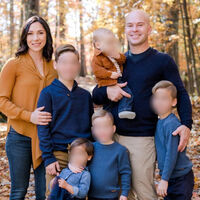


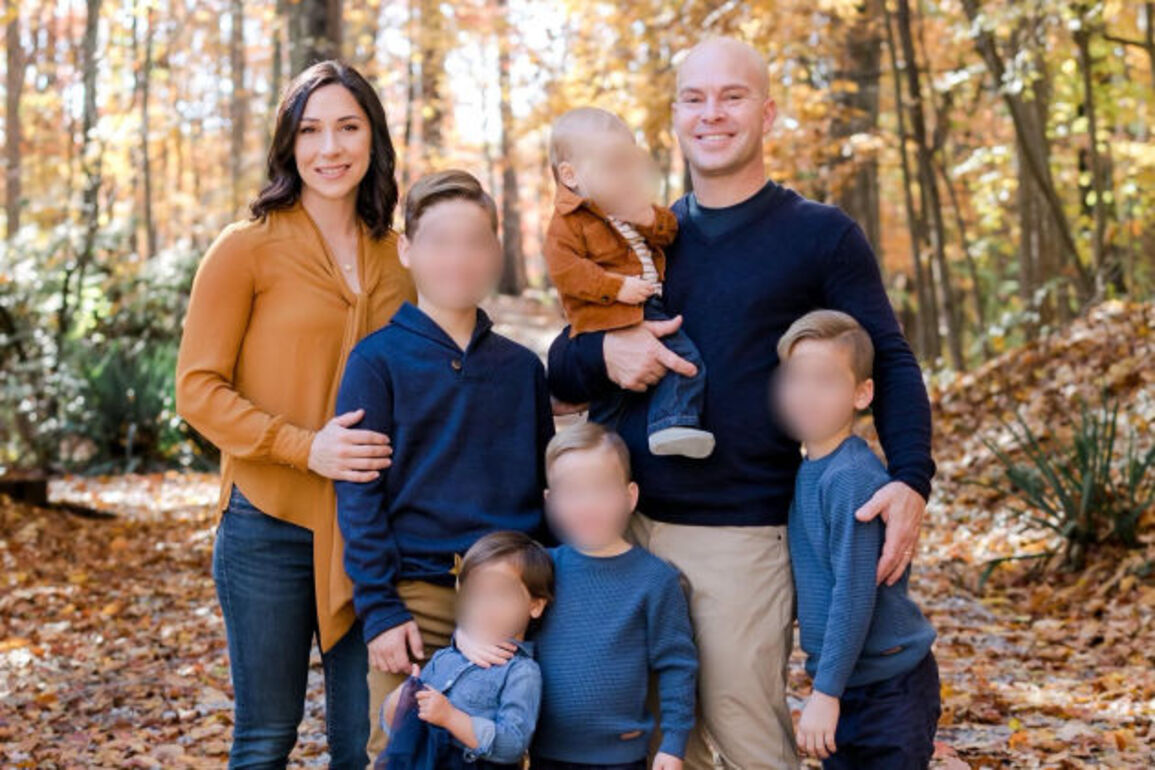
RICHMOND, Virginia: A U.S. Marine and his wife will be allowed to keep an Afghan orphan they brought home in defiance of a U.S. government decision to reunite her with her Afghan family.
The decision by the Virginia Supreme Court this week will, hopefully, end a bitter and long legal battle over the infant girl's fate.
In 2020, a judge in Fluvanna County, Virginia, allowed Joshua and Stephanie Mast to adopt a young girl even though she was living about 7,000 miles away in Afghanistan with a family that the Afghan government had identified as her relatives.
Later, four judges on the Virginia Supreme Court overturned earlier lower-court rulings that had found the adoption invalid from the start because of serious problems in how it was conducted. The high court said that under Virginia law, once six months have passed after an adoption order, it cannot be challenged—even if mistakes were made or fraud was involved.
However, three other judges strongly disagreed. In their written dissent, they described what happened as "wrong," "cancerous," and "like a house built on a rotten foundation."
Lawyers for the Mast family refused to comment because of a court order. Lawyers for the Afghan family also said they were not ready to speak publicly.
The child had been injured during a military raid in Afghanistan in September 2019. U.S. soldiers attacked a rural compound targeting suspected terrorists. During the raid, the child's parents and siblings were killed. Soldiers then took her to a hospital on an American military base.
At the time, some people believed she might not be Afghan and tried to argue that she should be brought to the United States. But the U.S. State Department, during the first administration of Donald Trump, said international law required the U.S. to work with the Afghan government and the Red Cross to reunite the girl with her closest living relatives.
The Afghan government decided she was Afghan and approved a man who said he was her uncle. The U.S. government accepted this and returned her to that family. The uncle then allowed his son and the son's new wife to raise the child in Afghanistan for about 18 months.
Meanwhile, the Mast couple went to court in rural Virginia and convinced judges to give them custody and later adoption orders, saying the girl was a "stateless" child of foreign fighters. In December 2020, Judge Richard Moore approved the final adoption.
After six months passed, the legal deadline to challenge it, the child was still in Afghanistan, and her relatives said they did not know any U.S. judge had given her to another family. The Mast family later tried to persuade them to send the girl to the U.S. for medical care, but they refused to let her travel alone.
When the U.S. military withdrew from Afghanistan and the Taliban took control, the Afghan family agreed to leave the country. Mast used his military contacts to help them get on an evacuation flight. After they arrived at a refugee center in Virginia, Mast took the child from them, and they have not seen her since.
The Afghan relatives then challenged the adoption in court. They argued that a Virginia court had no authority over a foreign child and that the adoption orders were based on misleading information given to the judge.
The Virginia Supreme Court said the six-month rule exists to give children stability and prevent them from being moved from one home to another. The court said the only way to break this rule is to prove that a biological parent's constitutional rights were violated. In this case, the infant was an orphan.