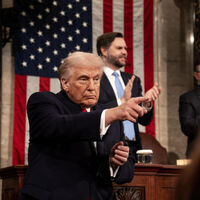


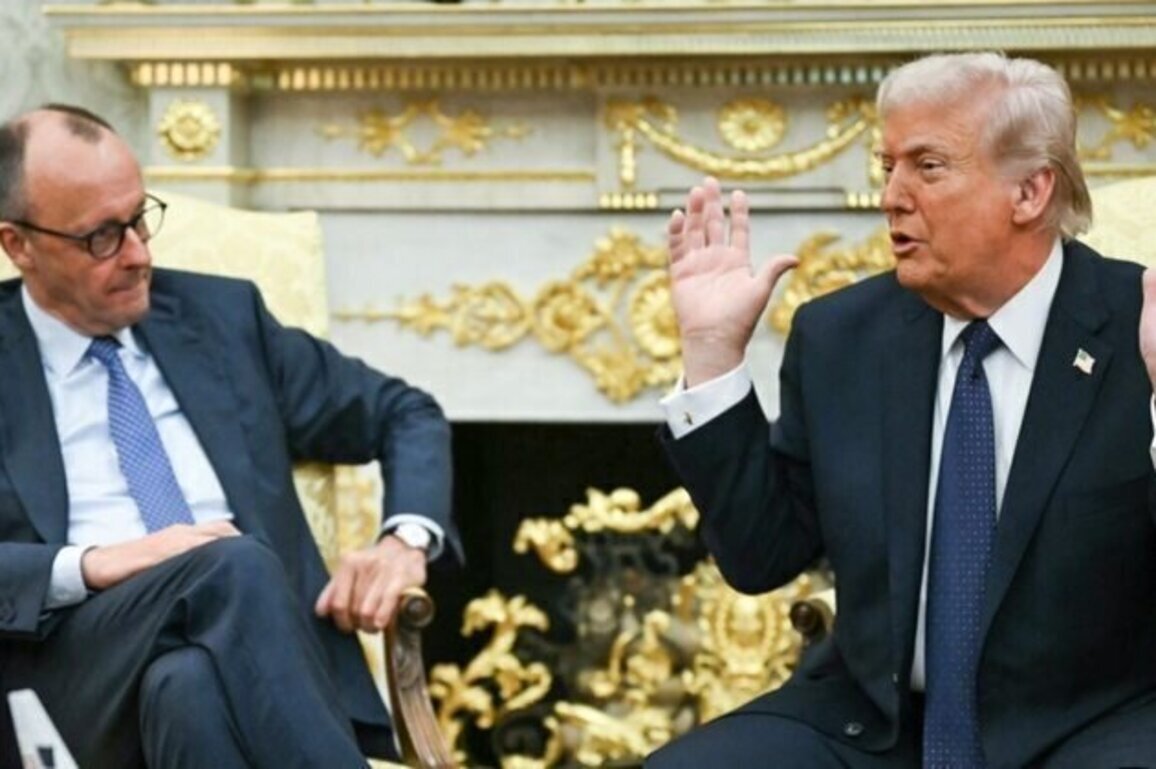
Speaking at the White House alongside the visiting German Chancellor Friedrich Merz, US President Donald Trump said "Something had to be done" about Iran, as the United States and Israel continued bombarding the Islamic republic for a fourth day and Tehran retaliated with strikes across the region.
"I had a feeling Iran would have attacked us first," he told journalists on March 3.
"They are even attacking countries, which were kind of friendly with them and were doing nothing hoping to sit it out," Trump continued, noting that Iranian drones and missiles have hit the UAE, Qatar, Saudi Arabia, and Oman -- which had been mediating talks between Washington and just days before the aerial campaign began on February 28.
Asked about rising oil and gas prices as the result of the conflict, Trump said he was confident they would return to normal as soon as military actions are over and that it would not in too distant future. "Pretty much everything is being knocked out" in Iran already, he said.
Earlier on March 3, Trumpsaidit was "too late" for talks with Iran after Tehran made a bid to hold discussions amid the US-Israeli strikes.
"Their air defense, Air Force, Navy, and Leadership is gone. They want to talk. I said 'Too Late!'" Trump wrote in a social media post on March 3. He did not say when Iranian officials had indicated they were willing to enter talks.
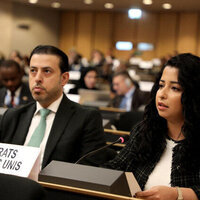
Iran's ambassador to the United Nations in Geneva also cast doubt on any talks, saying that "for the time being we are very doubtful about the usefulness of negotiation."
Gallery Compare:
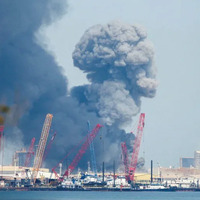
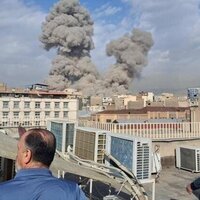
Satellite Images Show Destruction, Fires In Middle East Amid Ongoing Iran Conflict
RFE/RL
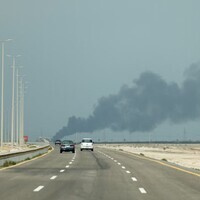
Before and after images capture sites in the Middle East hit by US-Israeli and Iranian strikes. (Scroll left to see the damage caused in each location.)
With diplomacy appearing at a standstill, air-raid sirens wailed across the Middle East.
Explosions were heard in Tehran and Beirut, while Iranian drones slammed into the US Embassy in Saudi Arabia, which subsequently said it was closing a day after Washington's embassy in Kuwait did the same.
The US Embassy in Riyadh wasstruck by two drones, causing a "limited fire" and "minor material damage," Saudi Arabia's Defense Ministry said, as tensions escalate across the Middle East.
The ministry said an initial assessment pointed to a drone attack on the diplomatic compound in the Saudi capital. Later reports said additional drones were targeting the site as Iran continued its retaliatory attacks across the Persian Gulf following US and Israeli strikes that have resulted in rocket and drone fire across the region.
The Riyadh embassy building was empty at the time of the attack and no casualties were reported.
SEE ALSO:
Iran's War Strategy: Raise The Cost Of Conflict To Secure An Eventual Cease-Fire
Reports from inside Iran indicate that American and Israeli fighter jets attacked a number of military, police, and intelligence sites in various Iranian cities on March 3.
Among these places are the Assembly of Experts building in Qom, intelligence news headquarters for the Islamic Revolutionary Guards Corps (IRGC) in Urmia, the Revolutionary and Public Court in Urmia, the IRGC's "Unity" base in the city of Paveh, and the Najafabad missile base in the north of Isfahan Province.
Israel, meanwhile, said at least seven people were injured in the central part of the country after Iranian missiles rained down on the area, which includes Tel Aviv.
"Search and rescue forces, together with numerous emergency teams, are currently operating at the impact sites in central Israel," the military said. "The circumstances of the impact are under review."
As the United States and Israel wage war against Iran, Tehran is widening the theater of the conflict and raising the costs for Washington in a bid to secure an eventual cease-fire, experts say.
Iran has fired hundreds of missiles and drones targeting US military bases as well as key energy and commercial sites in Saudi Arabia, the United Arab Emirates, Kuwait, Bahrain, and Qatar -- all American allies -- since February 28.
Chart: Oil, Gas Prices Skyrocket (March 3, 2026)
The fighting has reverberated outside the region, with stock markets, currencies, and commodities prices reflecting concerns that the conflict may spin out of control.
The price of Brent crude oil in global markets rose to more than $82 per barrel on March 3, about $10 higher than it was before the United States and Israel launched attacks on Iran on February 28.
Trump Says 'Something Had To Be Done' About Iran As Strikes Continue
Share
ShareCopy link
Facebook
X (Twitter)
LinkedIn
Email
Share
ShareCopy link
Facebook
X (Twitter)
LinkedIn
Email